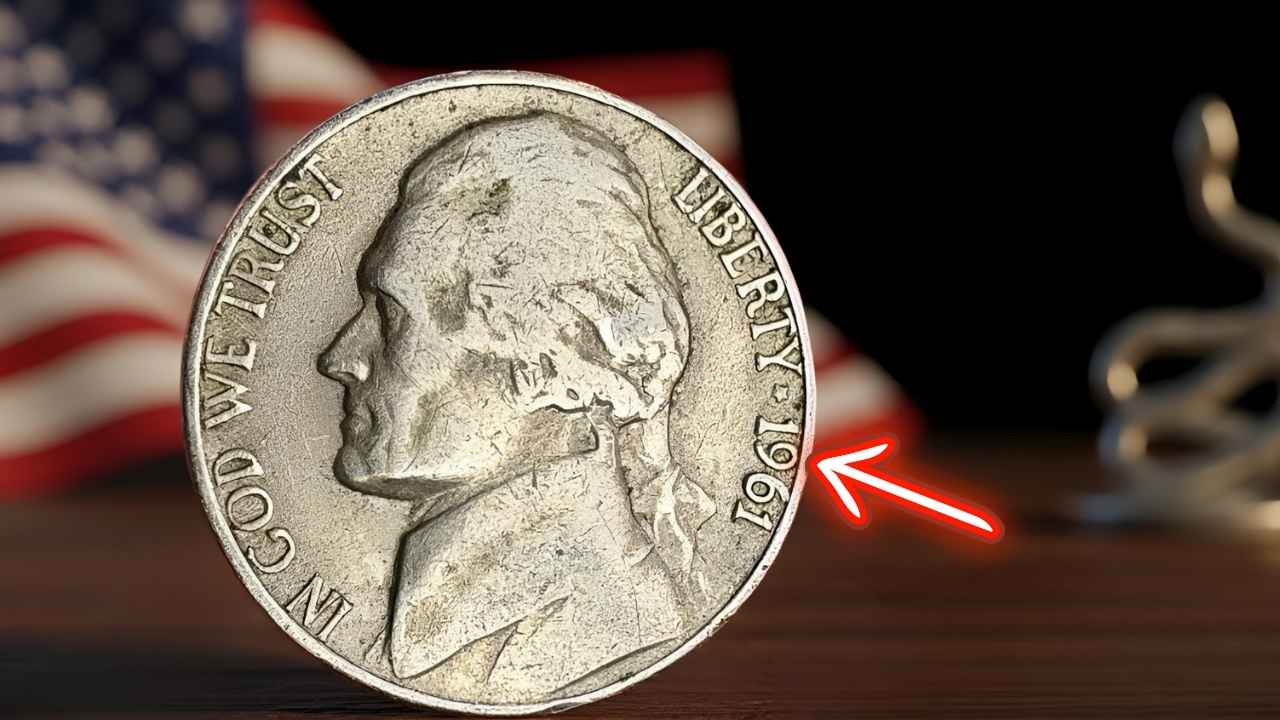
1961 Five Cents Coin Value : The 1961 Five Cents coin, often referred to as the Jefferson Nickel, is a fascinating piece of American coinage history. Struck during a period of economic stability, it represents both the continuation of a long-running design and the subtle changes that make numismatics so engaging. While millions of these coins were produced, certain varieties, conditions, and hidden details have elevated their status among collectors. Understanding the history, value, and hidden aspects of the 1961 nickel provides insight into why it remains a coin worth studying and collecting today.
Historical Background
The Jefferson Nickel was first introduced in 1938, replacing the Buffalo Nickel. Designed by Felix Schlag, it features a portrait of Thomas Jefferson on the obverse and his home, Monticello, on the reverse. By 1961, the design had already been in circulation for more than two decades, but the coin continued to be a staple of everyday commerce. The 1961 issue was struck at both the Philadelphia and Denver mints, with the Denver mintmark “D” appearing below Monticello on the reverse. These coins were produced in large numbers, yet subtle differences in strike quality and minting errors have made certain examples more valuable.
Production and Mintmarks
In 1961, the Philadelphia Mint produced over 76 million nickels, while the Denver Mint struck more than 283 million. The sheer volume of production means that most 1961 nickels are common in circulated condition. However, coins from Denver often show weaker strikes, particularly in the details of Monticello’s steps. Collectors pay close attention to these details, as sharp strikes with full steps are significantly rarer and more valuable. The distinction between Philadelphia and Denver issues is crucial when evaluating the coin’s worth.
Value in Circulation and Collecting
For most circulated 1961 nickels, the value remains close to face value. However, uncirculated examples, especially those with full steps on Monticello, can command much higher prices. In 2026, a typical uncirculated 1961 nickel might sell for $5 to $15, while coins graded MS65 or higher with full steps can reach $100 or more. Proof versions, struck with special care for collectors, are even more desirable. A 1961 proof nickel in deep cameo condition can sell for $50 to $200 depending on grade and eye appeal.
Hidden Varieties and Errors
One of the most intriguing aspects of the 1961 Five Cents coin is the presence of hidden varieties and minting errors. Collectors often seek doubled die obverse or reverse varieties, where the lettering or design elements show noticeable doubling. These coins are rare and can command significant premiums. Another hidden treasure is the full steps designation, where all six steps of Monticello are clearly visible. Because of weak strikes and worn dies, full step nickels are scarce, making them highly collectible. Off-center strikes, die cracks, and other minting anomalies also add to the hidden value of certain 1961 nickels.
The Role of Condition and Grading
Condition plays a central role in determining the value of any coin, and the 1961 nickel is no exception. Coins are graded on a scale from 1 to 70, with higher numbers indicating better preservation. Circulated coins often show wear on Jefferson’s portrait and Monticello’s details, reducing their value. Uncirculated coins with sharp strikes and attractive luster are far more desirable. Professional grading services provide certification that adds credibility and often increases the market value of a coin. Collectors should pay close attention to strike quality, luster, and any signs of damage when evaluating a 1961 nickel.
Market Trends Over Time
Over the past several decades, the value of 1961 nickels has remained relatively stable for common examples, but rare varieties and high-grade coins have seen steady appreciation. In the 1980s and 1990s, full step nickels began to attract serious attention, and their values rose accordingly. Today, the demand for high-grade examples continues, with collectors willing to pay significant premiums for coins that meet strict quality standards. The market for proof nickels has also grown, as deep cameo examples are recognized for their beauty and rarity.
Collecting Strategies
For collectors interested in the 1961 Five Cents coin, several strategies can be effective. Beginners may start by acquiring circulated examples to appreciate the design and history. More advanced collectors often focus on uncirculated coins with full steps or proof issues with deep cameo contrast. Searching through rolls of nickels can sometimes yield hidden treasures, though the odds are slim. Attending coin shows, auctions, and working with reputable dealers provides access to higher-quality examples. Building a complete set of Jefferson Nickels, including the 1961 issue, is a rewarding challenge that connects collectors to decades of American coinage.
Cultural and Historical Significance
Beyond its monetary value, the 1961 nickel holds cultural and historical significance. It represents a period of continuity in U.S. coinage, with Jefferson’s portrait symbolizing democratic ideals and Monticello reflecting architectural heritage. For many Americans, nickels were part of everyday life, used in vending machines, payphones, and countless transactions. Collecting these coins today is not only about value but also about preserving a tangible piece of mid-20th century history.
Conclusion
The 1961 Five Cents coin is more than just a nickel from the past. It embodies history, artistry, and hidden value that continues to captivate collectors. From common circulation strikes to rare full step varieties and proof issues, the coin offers opportunities for discovery and appreciation. In 2026, its value reflects both market demand and the enduring appeal of Jefferson Nickels. Whether pursued as a hobby or an investment, the 1961 nickel remains a coin worth collecting, studying, and cherishing for its place in American numismatic history.